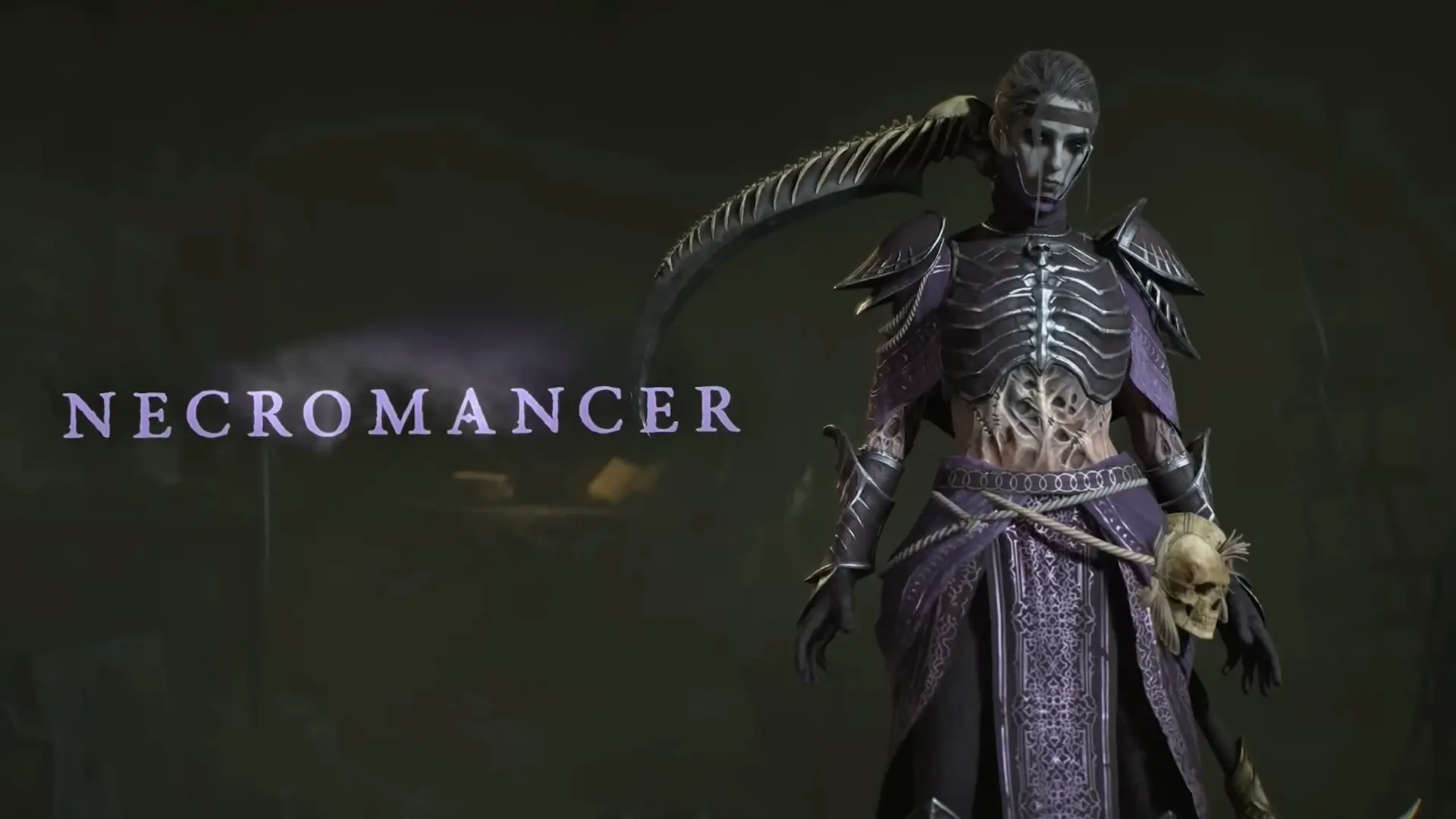
The Necromancer’s iconic army is about to feel a whole lot more personalized. With Lord of Hatred, Blizzard is splitting up  Raise Skeleton into two distinct skills, moving minion management directly into the skill tree, and reworking Sacrifice in a way that finally lets summoners have their cake and eat it too. If you’ve ever felt like the Book of the Dead boxed you into a single playstyle, this overhaul is the answer.
Raise Skeleton Becomes Two Distinct Skills
Players have been asking for this, and it is finally happening. Raise Skeleton is being split into two separate skills.
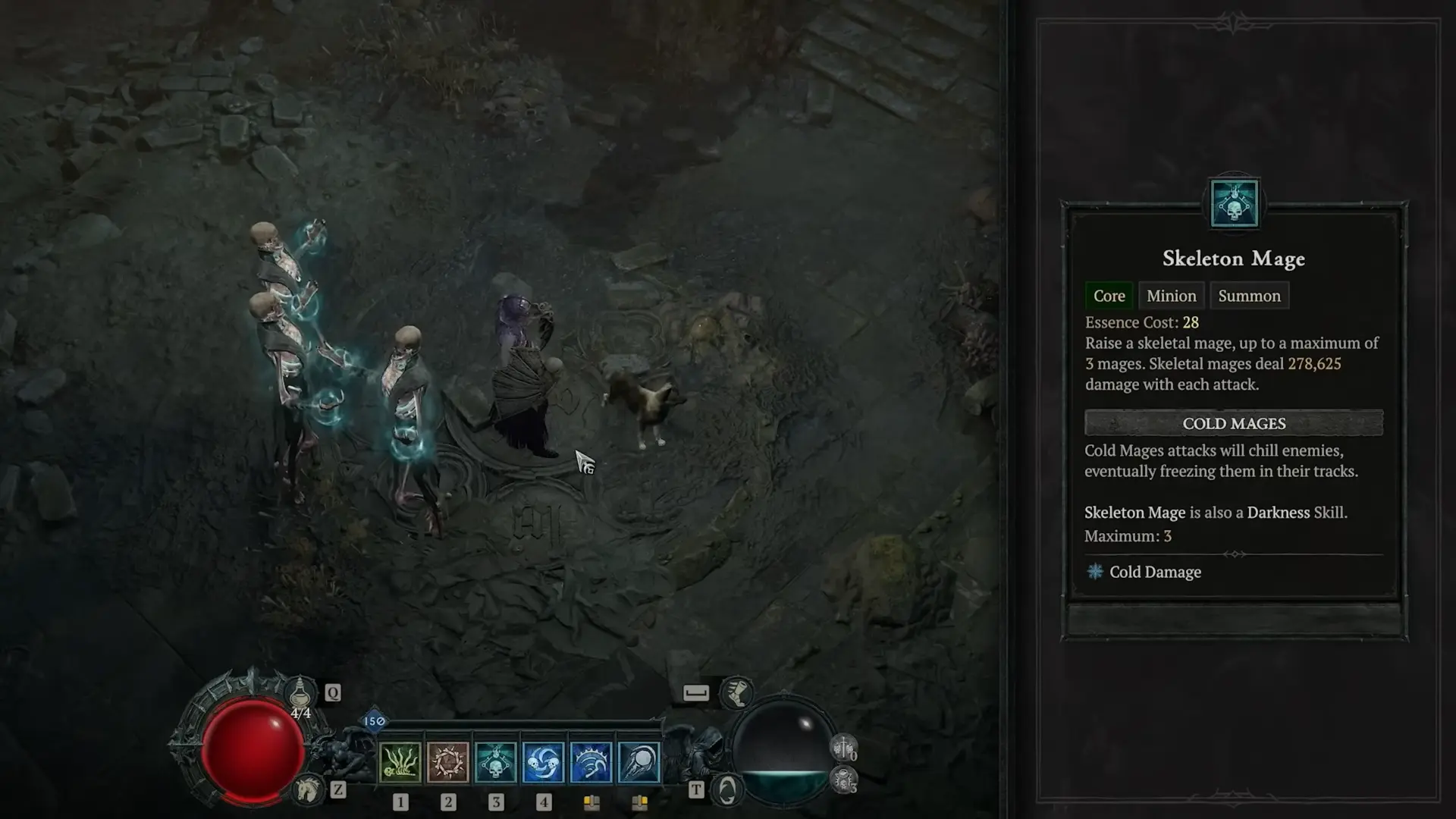
- Summoning Skeletal Mages uses Essence, giving you direct control over when and how your casters hit the field.
- Summoning Skeletal Warriors happens passively from Corpses and can be actively commanded to leap at and attack a target.
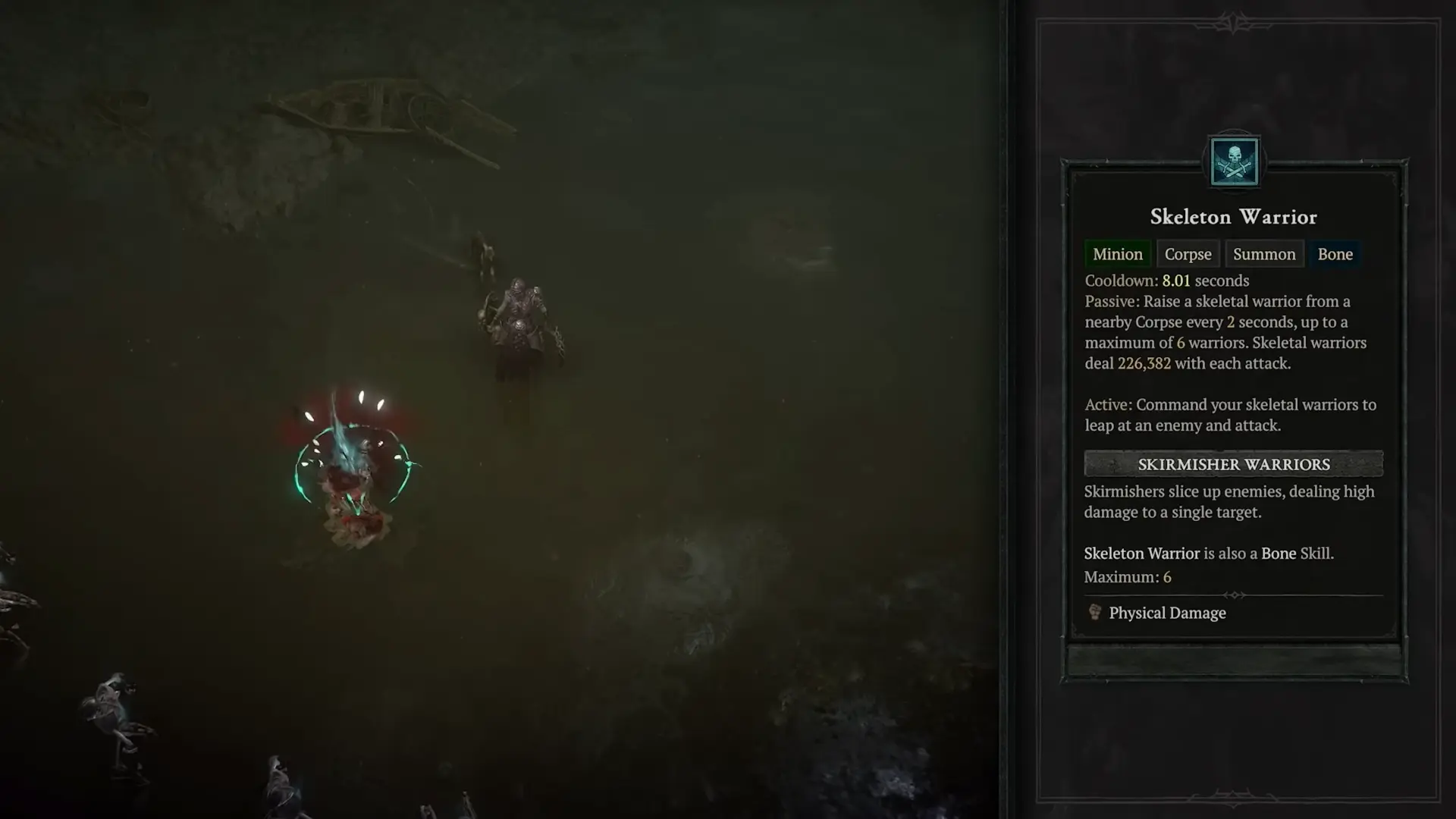
Instead of one button doing everything, your Warriors now operate as a self-replenishing frontline tied to your Corpse generation, while your Mages become a deliberate Essence investment. The new Active component on Skeletal Warriors is easy to miss, but finally allows players the tactical advantage of directing their skeletons mid-fight.
Minions Move Into the Skill Tree
The Book of the Dead is no longer your only minion customization menu. Skeletal Mages, Skeletal Warriors, and Golems are now part of the Necromancer skill tree.
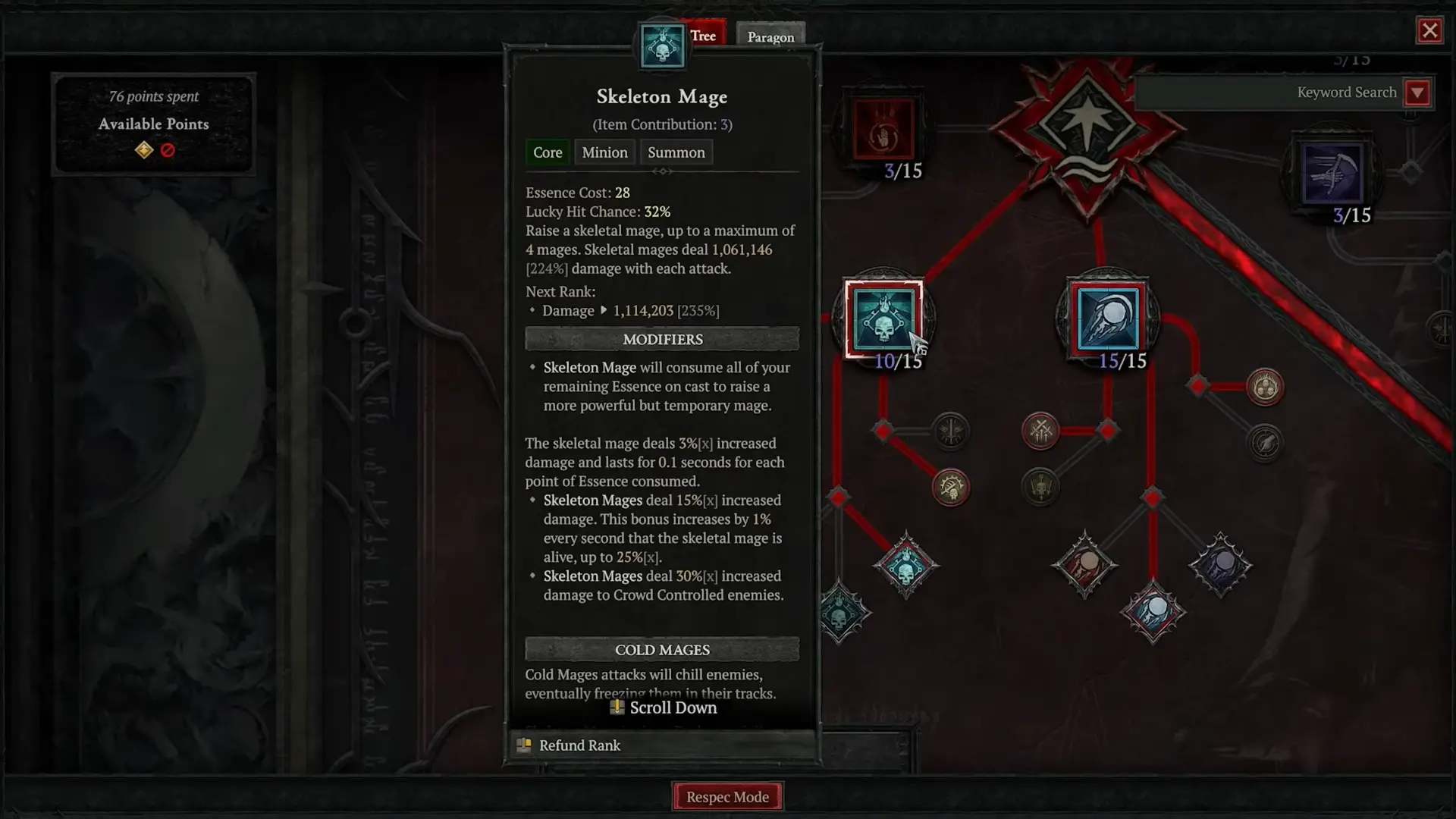
This opens up an enormous amount of build flexibility. Instead of being limited to the Book of the Dead’s predetermined upgrade paths, you can now invest skill points directly into your minions, layer on modifiers, and shape exactly how each summon contributes to your build. The skill tree screenshots show modifiers like increased damage scaling with Essence consumed, bonus damage to Crowd Controlled enemies, and stacking damage the longer a mage stays alive. This kind of granular tuning was simply not possible before.
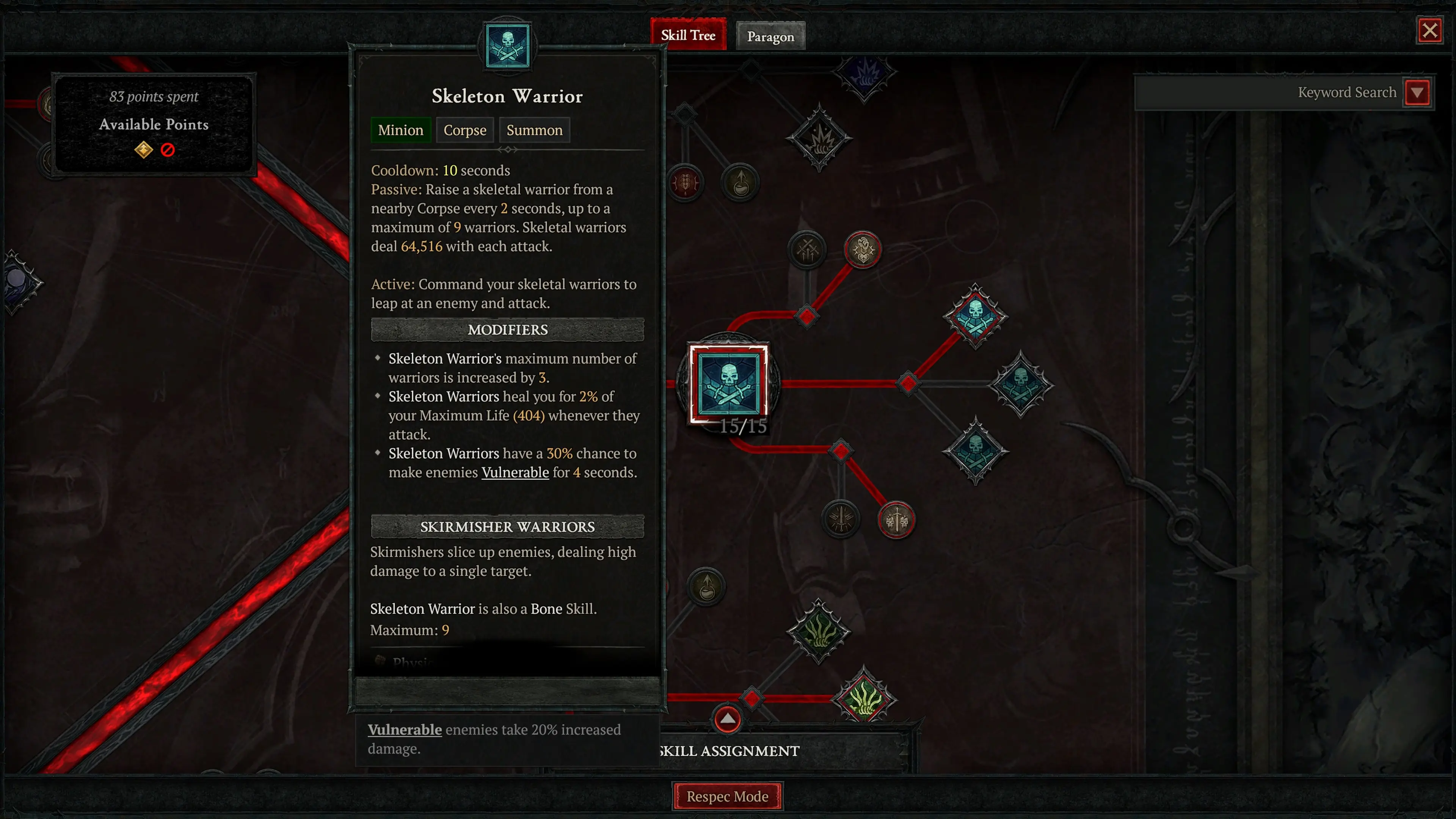
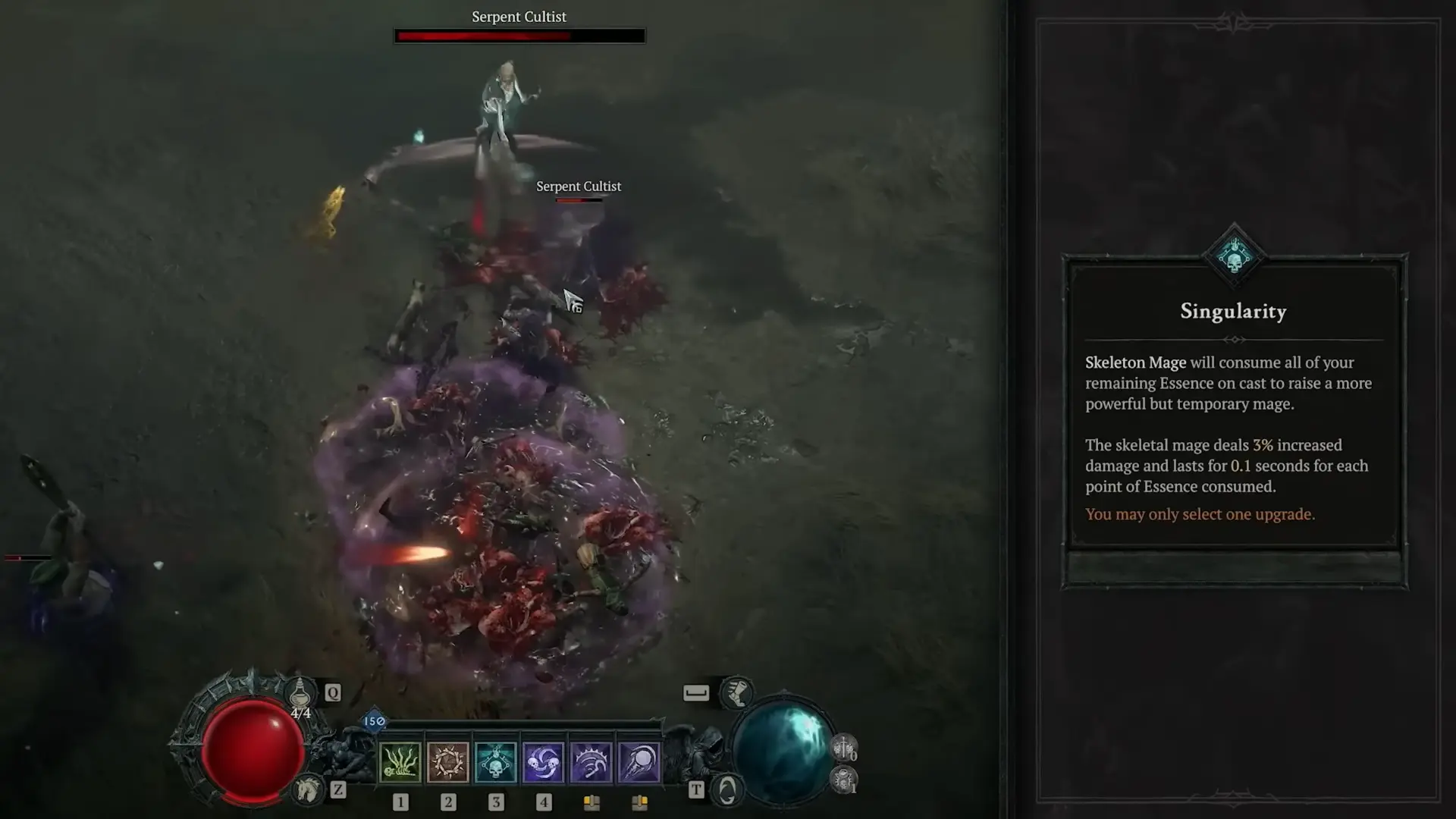
Skeletal Mages get the same depth of treatment, with a Singularity upgrade that lets you dump all remaining Essence into a single, massively buffed temporary mage.
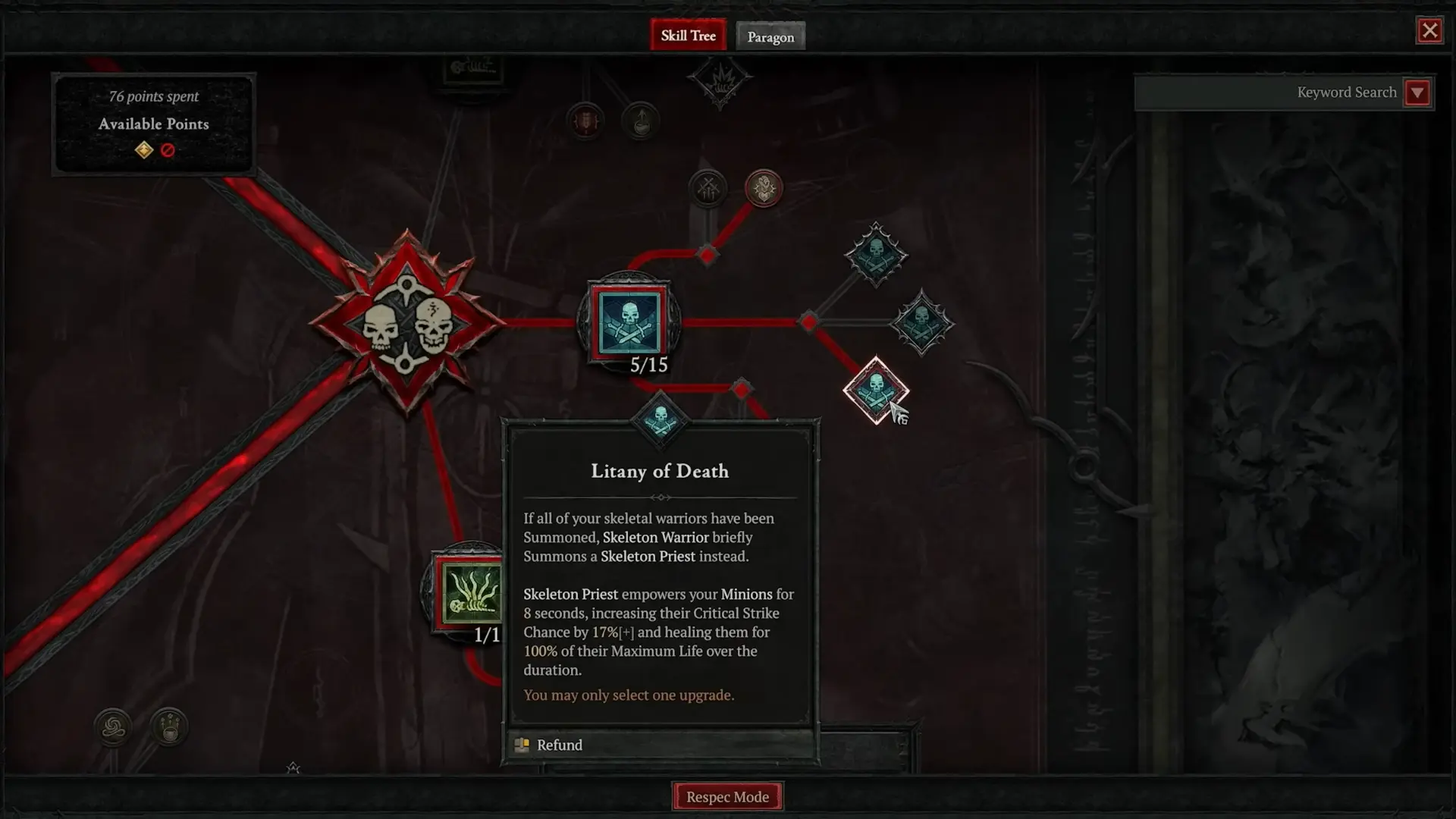
Skeletal Priests are still here, too, but they have been moved to an upgrade for the Skeletal Warriors. Now, they empower your minions with bonus Critical Strike Chance and heal them for 100% of their Maximum Life over 8 seconds.
The Golem hasn’t been shown in the skill tree yet, but if the Skeletal Warrior and Mage nodes are anything to go by, Necromancer mains are in for a treat. Expect the same kind of granular modifiers, specialization branches, and meaningful tradeoffs that are reshaping the rest of the minion kit.
What Happens to the Book of the Dead?
With so much customization within the skill tree, this is the obvious question. Blizzard’s answer: it stays, with one critical change.
The Book of the Dead still defines your minion type and lets you choose upgrades if you want to keep your minions active. The structure players are familiar with remains intact. Skeletal Warriors can be specced into Skirmishers, which now grant the Bone Skill tag, or pushed toward Reapers, which carry the Darkness Skill tag and benefit from related synergies like Aspect of the Void. These tag assignments open up entirely new paths that simply weren’t possible before.
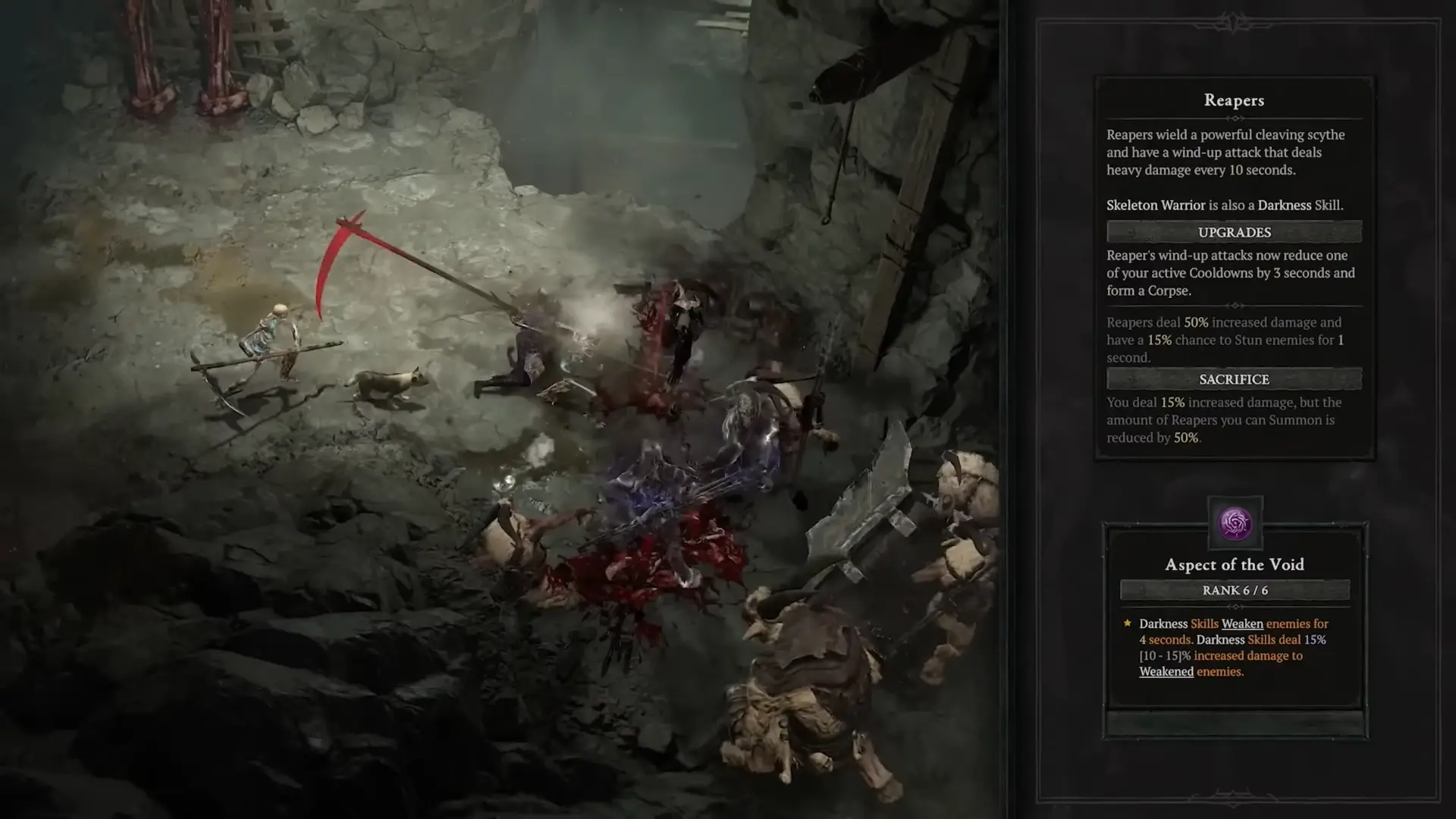
While this structure is familiar, Sacrifice bonuses have been completely reworked.
Previously, sacrificing a minion type meant giving up that minion entirely in exchange for a passive bonus. It was a hard either-or choice. Now, Sacrifice no longer removes your ability to summon those minions. As long as you’ve invested skill points and have the skill on your bar, your minions still appear, albeit in reduced numbers or with reduced damage. If you’re using minions primarily for buffs, support, or tanking rather than as your main damage source, the tradeoff might be more than worth it.
What This Means for Builds
The combined effect of these changes is a Necromancer that’s far more build-defined than archetype-defined. The old “minion or non-minion” binary is gone. You can run a heavy summoner army with Sacrifice bonuses layered on for support. Hybrid setups become viable too, where your Mages handle damage while your Warriors tank and apply Vulnerable. For utility-focused players, leaning entirely into Reapers opens up options like cooldown reduction. The decision tree gets dramatically wider.
Minion builds in Diablo IV have historically struggled to feel like they offer real customization beyond “more minions, more damage.” Pulling minions into the skill tree, adding meaningful specialization branches, and softening Sacrifice from a hard cut to a flexible tradeoff all push toward summoners having genuine theorycrafting depth that can interact with more of the Necromancer’s kit.
For Necromancer mains who’ve been waiting for the class to feel as customizable as its lore suggests, Lord of Hatred is delivering one of the most exciting reworks in the expansion.
Are you ready for Lord of Hatred? Stay current on the latest expansion news by visiting our Diablo 4 news hub.